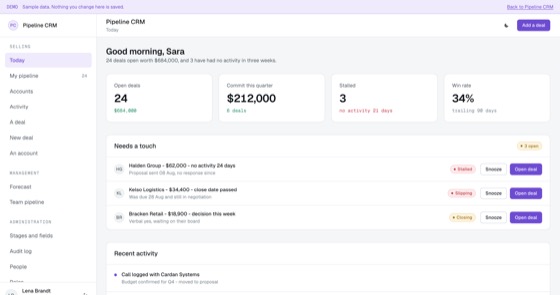
Pipeline CRM
Deal stages, forecasting and activity history for a sales team that has outgrown a spreadsheet.
5.0 out of 511 sold
Buy once. Own forever
Seventy-two CRM, ERP and booking apps, open right now with real data. Buy one and the repository is yours.
The problem
Every new hire raises a bill you already pay. Every workflow you need sits behind the next tier. And if you take bookings through a marketplace, 15–30% of each one leaves before you see it. Either way the data describing how your business runs lives in a database you cannot reach.
The catalogue
None of these is a mock-up. Each one opens as a working build you can click through, with realistic data already in it.
Deal stages, forecasting and activity history for a sales team that has outgrown a spreadsheet.
5.0 out of 511 sold
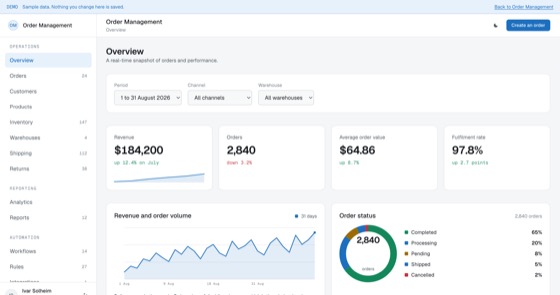
A full order management system: orders, customers, catalogue, stock, warehouses, shipping, returns, automation rules and integrations.
5.0 out of 510 sold
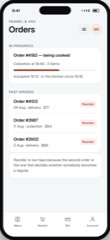
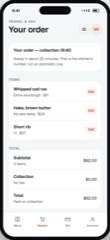
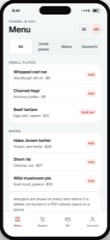
Ordering for collection and delivery, with the kitchen seeing it the moment it lands.
5.0 out of 511 sold
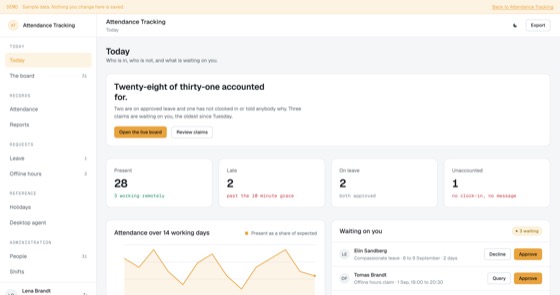
Clock-in against a shift, leave, offline-hour claims and payroll-ready reports, with every person able to see what is recorded about them.
5.0 out of 511 sold
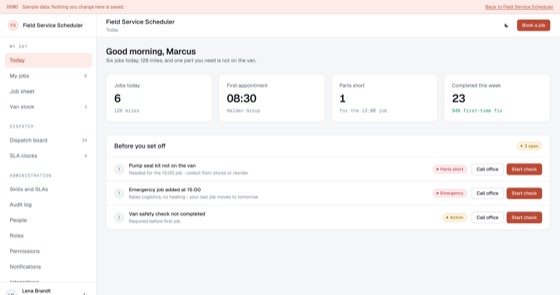
Dispatch board, engineer routing, job sheets and parts usage for teams that work on site.
5.0 out of 56 sold
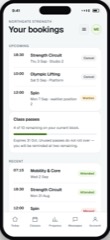
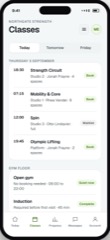
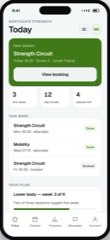
Class booking, passes and training plans for members, with a diary and client roster for trainers.
5.0 out of 510 sold
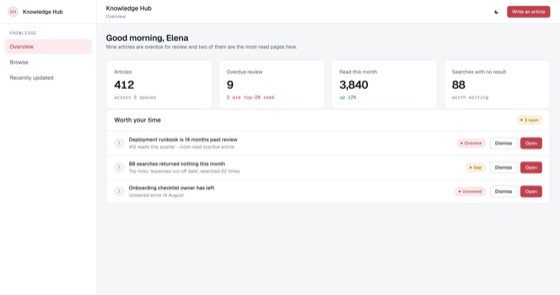
Internal documentation with real search, ownership, review dates and version history.
5.0 out of 58 sold
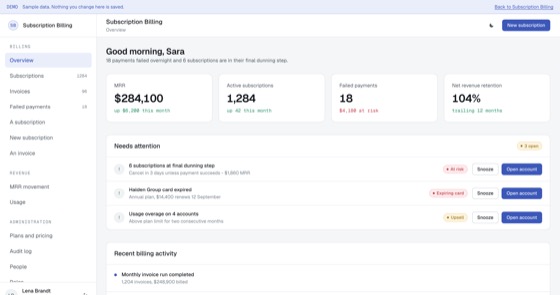
Plans, usage metering, invoicing and dunning, with MRR you can actually reconcile.
5.0 out of 55 sold
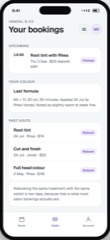
Booking against real stylist availability, with deposits and colour history.
5.0 out of 510 sold
The numbers
The comparison that matters is not licence against licence. It is a bill that grows every time you hire against one that does not move. Set the two controls to your situation.
Saves $86,880 over three years, and your next hire adds nothing.
Illustrative. Subscription figures use publicly listed 2026 rates for typical mid-tier plans and exclude implementation and customisation. Ours is a fitted build from $2,400 plus self-hosting at $120 a month, paid to your own cloud provider. We are independent of and unaffiliated with any of these vendors.
Why now
A difference that large usually means a catch. Here it is simply that one half of the equation moved. Subscription software won for twenty years because building your own was the expensive, slow, risky option. It is not any more.
| What changed | Until recently | Today |
|---|---|---|
| Time to live | Until recentlySix to twelve months to a first login | TodayOne to three weeks to a fitted go-live |
| What it cost | Until recentlySix figures before it ran at all | TodayFrom $479 for a template you own outright |
| How it is priced | Until recentlyDiscovery billed by the hour, scope agreed later | TodayScoped and fixed-price before anyone writes code |
| Who keeps it running | Until recentlyAn in-house team needed to keep it alive | TodayMainstream stack, so any developer can pick it up |
| Who it suits | Until recentlyOnly worth it above roughly $100m of revenue | TodaySensible from about twenty people |
Two things changed. Application scaffolding became genuinely reusable, and the cost of producing a screen fell by roughly an order of magnitude. The licence bill did not fall with it.
On-demand
A marketplace charges 15–30% of every booking, and keeps the customer relationship you paid for. These are built the other way round: your brand on the app icon, your customer list in your database, and the source code in your repository.
Through a marketplace
$70–85reaches you
Through your own app
$100reaches you
At forty bookings a month, that is $600–1,200 you never see, on the same work.
Card processing still applies. The commission does not.
Book a consultantEvery one is built and running. Open one on a phone and see how it behaves.
How it works
Four steps, and the first one needs nothing from us. Times below are what it usually takes, not what it could take.
Every app in the catalogue is deployed and running. You open it, move a deal, receive stock, approve a claim. No sales call stands between you and the software.
One call. We map your stages, your approval thresholds, your document numbering and the two integrations that matter. You leave with a written scope and a fixed price, not a discovery retainer.
Fields, rules, roles, branding and the integrations agreed in scope. You see it on a staging URL from day two and comment as it goes, rather than reviewing at the end.
We move your existing records in, run both systems side by side, and train the team on the screens they will actually use. Go-live is a scheduled event with a rollback plan, not a hopeful Friday.
Pricing
The same source code in every case. What changes is how much of the shaping we do before it is yours.
The app as it stands, source code included.
From $479one-time
The app, shaped to how your team already works.
From $2,400one-time, fixed before we start
Something the catalogue does not cover yet.
Quotedfixed scope
Indicative starting points in USD, excluding local taxes.
What ownership means
On delivery the repository moves to your organisation. There is no licence server, no seat count and nothing that phones home.
The same transfer happens whether you buy a template or a fitted build.
Questions
The six we are asked before every purchase. None of the answers change once you are a customer.
Not covered here?
Ask a consultant directly. No form to fill in first, and no follow-up sequence.
Book a consultantAll questionsYes. On delivery the repository is transferred to your organisation, application code, database schema, migrations, seed data and deployment configuration. There is no obfuscation, no licence server and no phone-home. If we disappeared tomorrow your software would keep running and any competent developer could pick it up.
No. You pay once for the app. The only recurring cost is hosting, which you pay to your own cloud provider and which typically lands between $50 and $200 a month depending on size. We never charge per user, per record or per workflow.
Nothing breaks. Updates are improvements, not a licence renewal; the software you have keeps working indefinitely. You can extend updates, bring maintenance in-house, or hire any other developer, because the code is yours and it is written in a mainstream stack.
Your infrastructure. Most clients deploy to Vercel, AWS, Azure or a single VPS; some run it entirely on-premise for data residency reasons. If you would rather not manage it, we offer managed hosting as a separate, cancellable arrangement. It is never a condition of purchase.
No-code platforms are quick to start and hard to leave: your logic lives in their runtime and your data lives in their database. These are ordinary applications in TypeScript and PostgreSQL. You can read them, test them, extend them and host them anywhere.
Usually. We regularly integrate accounting, payment, email, storage, identity and shipping providers. Two integrations are included in a fitted build; anything with a documented API can be scoped, and we will say plainly when a legacy system has no sane integration path.
Start here
Every app in the catalogue is live with sample data. Open one, use it properly, and decide afterwards whether it is worth a conversation.