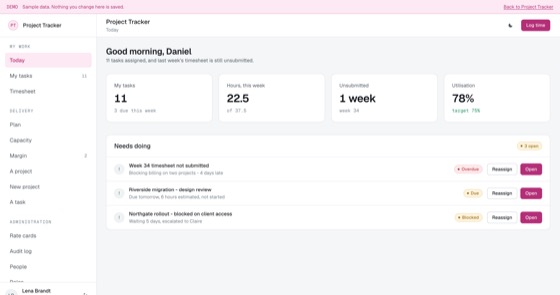
Project Tracker
Plans, capacity, timesheets and margin per project, for teams that bill their time.
5.0 out of 59 sold
Professional Services
Projects, timesheets, client portals, contracts and the ledger behind them, for firms whose product is their people.
The problem
A practice that bills by the hour has an unusually direct relationship with its software: the timesheet is the invoice. Paying per person for the privilege puts a cost on exactly the thing you are trying to grow.
Instead
These applications keep the plan, the logged time, the budget and the invoice on one record, so the margin on a project is a number rather than a reconstruction. Contractors and clients get access without appearing on a renewal.
9 business systems, every one running right now with realistic data and every role switchable. An application can appear under more than one industry, because most of them do.
Plans, capacity, timesheets and margin per project, for teams that bill their time.
5.0 out of 59 sold
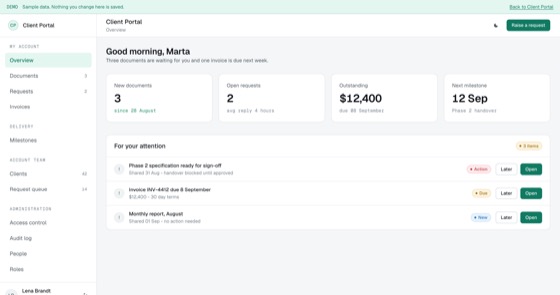
A branded space where your customers see their documents, requests and invoices without emailing you.
5.0 out of 59 sold
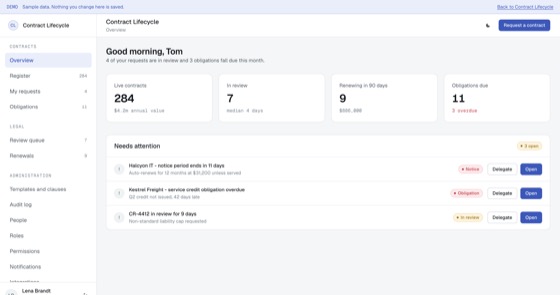
Templates, review queue, obligations and renewal dates that surface before they pass.
4.5 out of 55 sold
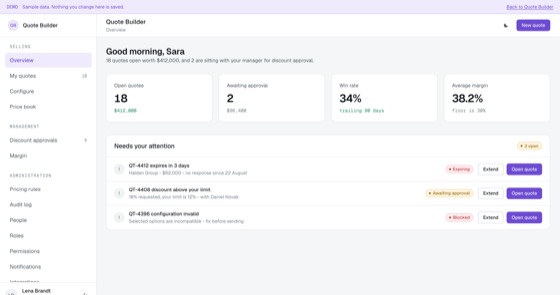
Configured quotes with rules, discount approval and margin visible before you send.
5.0 out of 58 sold
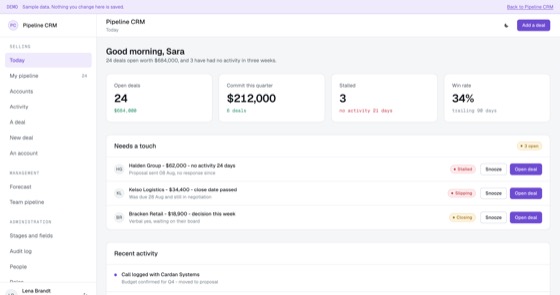
Deal stages, forecasting and activity history for a sales team that has outgrown a spreadsheet.
5.0 out of 511 sold
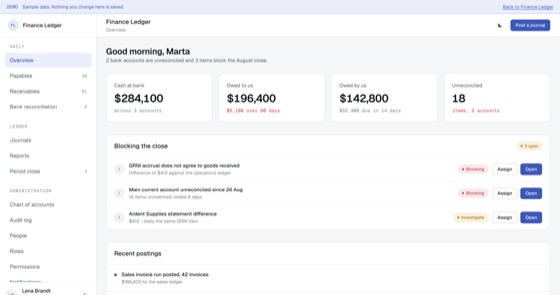
General ledger, payables, receivables and bank reconciliation on one double-entry schema.
5.0 out of 57 sold
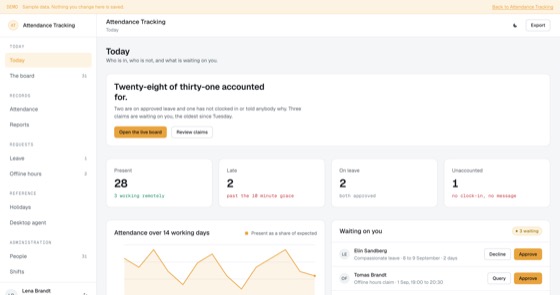
Clock-in against a shift, leave, offline-hour claims and payroll-ready reports, with every person able to see what is recorded about them.
5.0 out of 511 sold
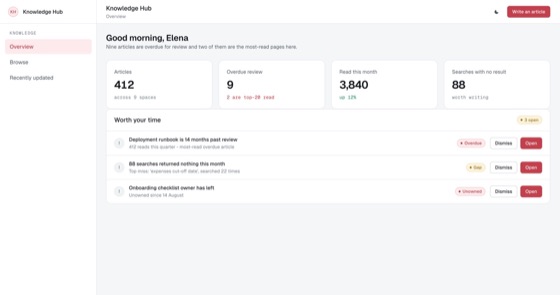
Internal documentation with real search, ownership, review dates and version history.
5.0 out of 58 sold
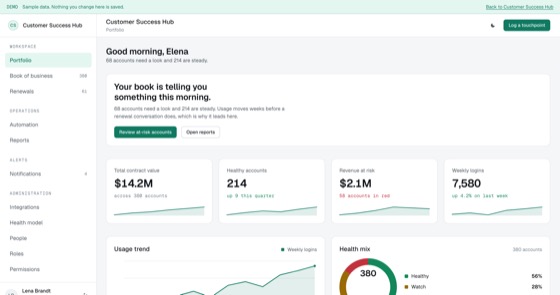
Health scores, renewal calendars and QBR prep for the team that keeps revenue from leaking.
4.5 out of 56 sold
5.09 sold
Plans, capacity, timesheets and margin per project, for teams that bill their time.
5.09 sold
A branded space where your customers see their documents, requests and invoices without emailing you.
4.55 sold
Templates, review queue, obligations and renewal dates that surface before they pass.
5.08 sold
Configured quotes with rules, discount approval and margin visible before you send.
5.011 sold
Deal stages, forecasting and activity history for a sales team that has outgrown a spreadsheet.
5.07 sold
General ledger, payables, receivables and bank reconciliation on one double-entry schema.
5.011 sold
Clock-in against a shift, leave, offline-hour claims and payroll-ready reports, with every person able to see what is recorded about them.
5.08 sold
Internal documentation with real search, ownership, review dates and version history.
4.56 sold
Health scores, renewal calendars and QBR prep for the team that keeps revenue from leaking.
Project tracking and the client portal are the common pair; contracts and the ledger follow as the firm grows.
Each application stands alone and is bought on its own. Most firms take the one that hurts most, run it for a quarter, then add the next.
Applications bought from this catalogue are built on the same conventions and expose an API, so the second one can read the first rather than duplicating it.
Fields, stages, roles and integrations adjusted to how you already work, for a fixed price after one scoping call, typically one to three weeks.
Add the office, the site, the contractors and the clients. There is no seat to buy and no renewal at which the number is re-examined.
Questions
Not covered here?
Ask a consultant directly. No form to fill in first, and no follow-up sequence.
Book a consultantAll questionsYes, and most do. Each application is a separate purchase from $479, with nothing bundled and no minimum.
They share conventions and each exposes an API, so joining them is ordinary integration work rather than a rebuild. A fitted build can wire them properly if you want that done for you.
Because it genuinely suits both. Stock control does not change much between a factory and a shop, and pretending otherwise would mean selling you two of the same thing.
The applications are shaped by the work rather than the sector name, which is why they cross over. If a process in your industry is genuinely unusual, that is what the scoping call is for.
All 9 run in full at no cost, with realistic data and every role switchable. No account and no call.
Start here
Every application on this page is running right now, with every role, and nothing to sign up for.