Restaurant & Food DeliveryLive
Menu
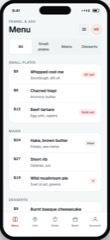
A menu customers can actually read on a phone, with allergens and live availability.
4.5 out of 59 sold
MenuCustomer1 / 6
5.0 out of 511 sold
Your own ordering app, so the order, the customer and the margin all stay with you. A delivery marketplace takes a share of each one.
From$999
Inside the app
25 connected functions on one schema across 3 user types. Everything below is in the template before a line of customisation.
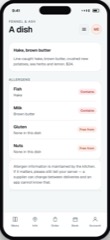
Sections, modifiers, allergens and availability. Sold out means sold out everywhere at once, including mid-service.
Modifiers priced as you set them, collection or delivery, and a time you can actually hit rather than one that keeps a customer happy for ten minutes.
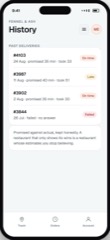
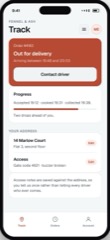
Live status to the door and a reorder button, which is what turns a first order into a regular.
Orders as they land with a prep clock, separated into collection and delivery. Readable across a hot kitchen rather than studied.
Change a price, mark an item off, adjust a zone. Seconds, from your phone, without emailing a platform.
Covers, average order value and repeat share as the service runs, rather than in a report that arrives on Tuesday.
User types
The diner is outside the business, the staff work the service, and the owner sets the rules. Three genuinely different jobs, so three genuinely different screens rather than one with things greyed out.
01Customer
3 of 6 screens
Orders for collection or delivery from your own app, sees the real menu with what is sold out, and reorders what they had last time in two taps.
Preview as the customer02Restaurant owner
2 of 6 screens
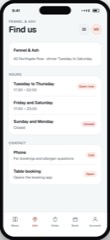
Sets the menu, prices, opening hours and delivery zones, and sees what the night actually did without waiting for a marketplace report.
Preview as the restaurant owner03Restaurant staff
1 of 6 screens
Sees orders as they land, in the order they need making, on a screen readable across a hot kitchen mid-service.
Preview as the restaurant staffThe limits
The same list we give for every app in the catalogue, because the fastest way to a bad project is a promise made in a meeting that nobody wrote down.
A marketplace charges commission partly because it generates demand. This serves the customers you already have or already reach.
It will not supply riders. It dispatches to drivers you employ or contract; a fleet is a separate arrangement.
Card and wallet payments run through your own provider account, which is what keeps the commission at zero.
We build to Apple and Google’s published guidelines, submit from your developer accounts and fix what comes back.
Questions
If yours is not here, ask it on the call rather than guessing from a pricing page.
Not covered here?
Ask a consultant directly. No form to fill in first, and no follow-up sequence.
Book a consultantAll questionsFor your regulars, yes, and those are the orders where commission hurts most because you already earned them. Most restaurants keep the marketplace for discovery and move repeat customers onto their own app. That is the honest split.
That is a normal integration in a fitted build. Connecting to the screen your kitchen already trusts beats asking them to learn a new one mid-service.
Yes. Collection, delivery, or both, scoped to what you actually operate rather than switched on and ignored.
You do, in your own database, exportable. That is the second reason to own this rather than rent it, a marketplace customer is not your customer.
Yes. All three apps, API, schema, migrations and deployment configuration transfer on delivery. No licence key, nothing that calls home.
Related
A menu customers can actually read on a phone, with allergens and live availability.
4.5 out of 59 sold
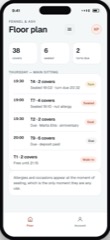
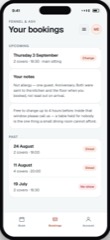
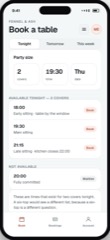
Reservations by covers and turn time, with a floor view the front of house can work.
5.0 out of 58 sold
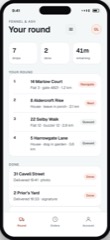
Order status the customer can see, and a driver round with proof at the door.
4.5 out of 58 sold
Start here
The preview is the real app with sample data. Open it and judge the software rather than the pitch.