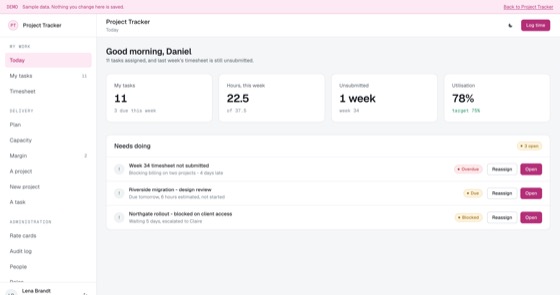
Project Tracker
Plans, capacity, timesheets and margin per project, for teams that bill their time.
5.0 out of 59 sold
TodayEngineer1 / 6
5.0 out of 56 sold
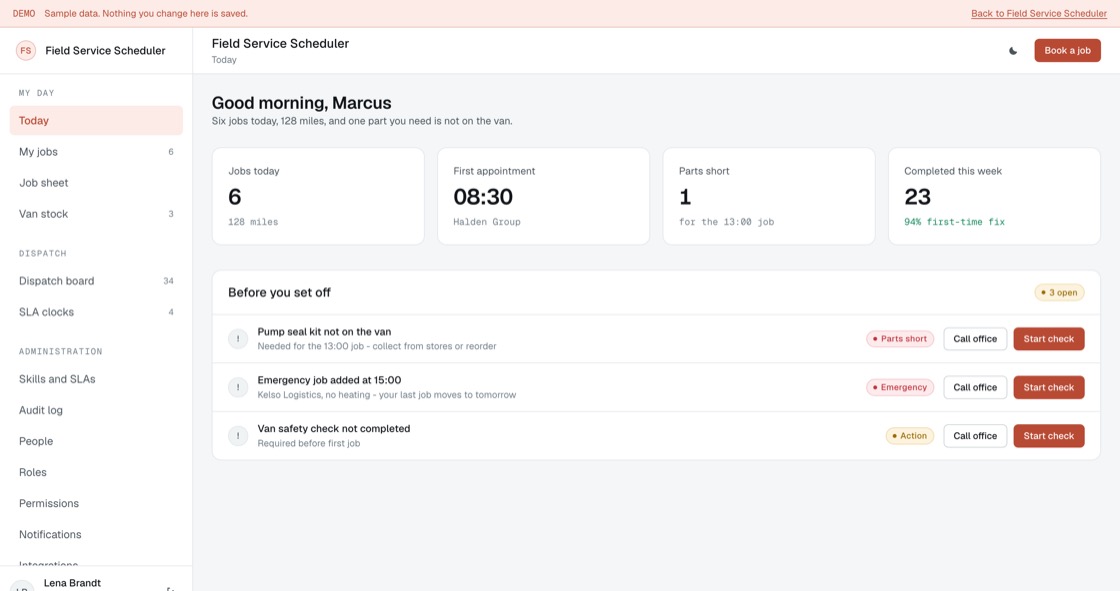
A dispatcher's screen and an engineer's phone, sharing one job record, so the office knows what happened on site without a phone call at six o'clock.
From$629
Inside the app
22 connected functions on one schema, spanning three permission levels. Everything below is in the template before a line of customisation.
Six jobs today, 128 miles, and one part you need is not on the van.
Today in order, with the window each customer was promised.
Completed on site, offline, with photos and a signature.
What you are carrying, and what the day's jobs need.
Every engineer's day, with skills and travel accounted for.
Response and fix timers per contract, with breach warnings while there is time.
Who may be sent to what, and what each contract promises.
Every assignment, override and SLA pause. Retained for seven years.
Permissions
An engineer sees their day and their van. A dispatcher owns the board and the clocks. An administrator sets skills and contract targets. Skills are enforced at dispatch because sending an unqualified engineer is a safety exposure, not just a wasted visit.
The build
9 screens, all of them live in the preview. Nothing on this list is a mockup or a roadmap item.
Access
My day
Dispatch
Administration
What you get
Maintenance, installation and repair businesses running 5–200 engineers.
Access and evidence
Sending an unqualified engineer wastes a visit and, on gas or refrigeration work, creates a real safety and certification exposure. The board will not let it happen quietly.
Related
Plans, capacity, timesheets and margin per project, for teams that bill their time.
5.0 out of 59 sold
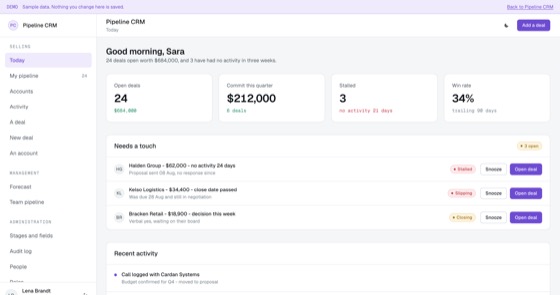
Deal stages, forecasting and activity history for a sales team that has outgrown a spreadsheet.
5.0 out of 511 sold
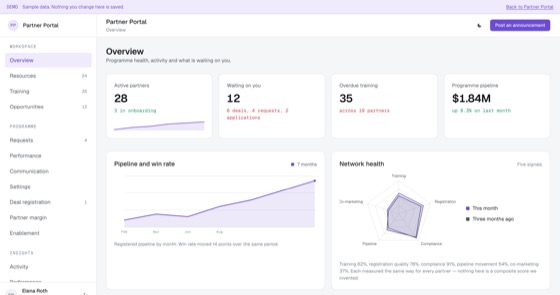
A whole partner programme in one app: deal registration, a gated resource library, training, funding requests and tier performance.
4.0 out of 53 sold
Questions
Not covered here?
Ask a consultant directly. No form to fill in first, and no follow-up sequence.
Book a consultantAll questionsYes. The repository, application code, database schema, migrations, seed data and deployment configuration, is transferred to your organisation on delivery.
Yes, and this is the feature that decides whether a field app gets used. Job sheets, photos, parts used and signatures are captured locally and sync when coverage returns, plant rooms and basements are exactly where signal fails.
It sequences an engineer's day by travel time and appointment window, and shows the cost of squeezing in an emergency. True multi-vehicle optimisation across a large job list is a specialist problem better integrated than reimplemented.
Jobs declare the skills and certifications they need, and the dispatch board only offers engineers who hold them. An expired certification removes someone from that work automatically, and overriding a match needs a manager and a reason.
That is the usual route. A fitted build sets up your contract levels and targets, skills matrix, job sheet templates, van stock lists, branding and up to two integrations.
Hosting only, paid to your own cloud provider, roughly $50 to $200 a month, rising mainly with photo storage from completed jobs.
Start here
A fitted build adjusts fields, stages, roles and integrations to how your team already works. One scoping call, a fixed price, one to three weeks.