E-Commerce StoreLive

Product Catalog
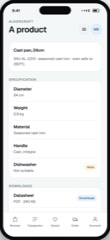
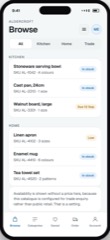
The range, browsable and current, for businesses that do not sell in the app.
ShopCustomer1 / 6
5.0 out of 58 sold
Your storefront, your customer list, and no percentage taken on a sale. Worth building when the transaction fee starts to matter more than the convenience.
From$1049
Inside the app
25 connected functions on one schema across 2 user types. Everything below is in the template before a line of customisation.
Grid, search and filters, with variants and genuine stock state. “Out of stock” discovered at checkout is the most expensive moment to discover it.
Variants, quantities and delivery options priced as you set them, with the total settled before the payment step rather than after.
Status, tracking and returns, plus reorder from history, which is most of what repeat revenue actually is.
Products, variants, price and stock in one place, editable from a phone.
The queue to pick, pack and dispatch, with stock decremented as it happens rather than reconciled on Friday.
What is low, what is out and what moved this week, so a reorder decision is made before the bestseller runs dry.
User types
The shopper is outside your business and the vendor runs it. If you host several sellers, the vendor role is per seller and each sees only their own listings and orders.
01Customer
3 of 6 screens
Browses without an account, buys, tracks the order and reorders from history. The order record belongs to a customer you own rather than to a platform.
Preview as the customer02Vendor
3 of 6 screens
Manages listings, stock and the orders to pick. Built for a seller running their own store, or for sellers you host on it.
Preview as the vendorThe limits
The same list we give for every app in the catalogue, because the fastest way to a bad project is a promise made in a meeting that nobody wrote down.
Checkout runs through your own payment provider account. We never sit in the money flow and never hold your funds.
No built-in audience. You bring the traffic; the app converts it and keeps the customer record.
VAT and sales tax, distance selling and returns law vary by market and remain yours to satisfy. We build to the rules you confirm apply.
A hosted store is genuinely good value early on, and we will say so. Building wins when the percentage is material or the platform’s model does not fit yours.
Questions
If yours is not here, ask it on the call rather than guessing from a pricing page.
Not covered here?
Ask a consultant directly. No form to fill in first, and no follow-up sequence.
Book a consultantAll questionsBelow a certain volume you should not, and we will tell you that. Building wins when the transaction percentage is material, when your pricing or catalogue rules do not fit the platform, or when you need the customer data somewhere you control.
That is usually the right approach. If Inventory Control or an ERP already holds the truth about stock, the store reads from it rather than keeping a second version that drifts.
It can, but recurring billing has enough of its own logic, dunning, proration, failed cards, that we scope it explicitly rather than assuming it.
The vendor role is already per seller. A full multi-vendor marketplace with payouts and commission splits is a larger fitted build, and worth scoping properly.
Yes. Both apps, API, schema, migrations and deployment configuration transfer on delivery. No licence key and nothing that calls home.
Related
The range, browsable and current, for businesses that do not sell in the app.
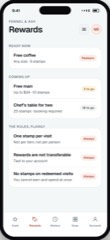
Stamps and rewards against a customer record you own, not a scheme somebody rents you.
4.5 out of 57 sold
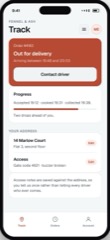
Order status the customer can see, and a driver round with proof at the door.
4.5 out of 58 sold
Start here
The preview is the real app with sample data. Open it and judge the software rather than the pitch.