Restaurant & Food DeliveryLive
Restaurant Ordering App
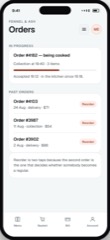
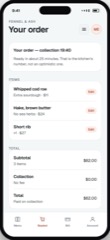
Ordering for collection and delivery, with the kitchen seeing it the moment it lands.
5.0 out of 511 sold
BookCustomer1 / 5
5.0 out of 58 sold
Reservations by covers and turn time rather than party size and hope. A floor the front of house can actually work during service, and a book you own.
From$849
Inside the app
23 connected functions on one schema across 3 user types. Everything below is in the template before a line of customisation.
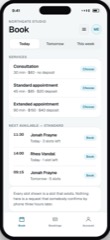
Availability by covers and turn time, so a two-top at 19:00 and a six-top at 19:00 are different questions with different answers.
With a real callback rather than a form. A waitlist nobody works is a way of losing a guest politely.
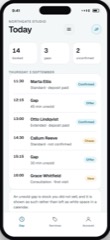
Tables, seated times and turns due, readable at a glance mid-service. Seat, turn and clear in one tap.
Taken against genuine remaining capacity, so the 20:00 booking still has its table when it arrives.
The week ahead by service, so you know on Monday whether Friday needs work.
Forecast covers and the no-show pattern per guest, which is the basis for a deposit policy that is fair rather than blanket.
User types
Booking a table, working a service and running a restaurant are three different jobs at three different speeds. The floor view in particular is built to be read in two seconds while carrying something.
01Customer
2 of 5 screens
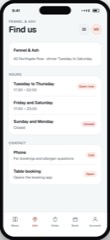
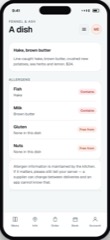
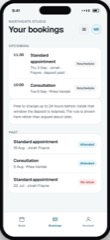
Books a table for a real time that exists, joins a waitlist that actually calls back, and can change it without ringing during service.
Preview as the customer02Restaurant owner
2 of 5 screens
Sets the floor plan, turn times and booking rules, and sees the covers, no-show rate and how full the book is before the week starts.
Preview as the restaurant owner03Restaurant staff
1 of 5 screens
Works the book during service: seat, hold, turn, and take a walk-in without losing the table that is due at eight.
Preview as the restaurant staffThe limits
The same list we give for every app in the catalogue, because the fastest way to a bad project is a promise made in a meeting that nobody wrote down.
A booking platform charges partly because it generates covers. This serves the guests you already reach.
Deposits run through your own provider account, which is what keeps the per-cover fee at zero.
It books and seats. Bills, items and payments belong to your till, and connecting the two is a fitted-build integration.
The app enforces what you set. Nobody can tell you how long your six-tops actually take, only your service can.
Questions
If yours is not here, ask it on the call rather than guessing from a pricing page.
Not covered here?
Ask a consultant directly. No form to fill in first, and no follow-up sequence.
Book a consultantAll questionsMostly the economics and the ownership. A platform charges per cover and keeps the guest record; this charges once and the book is yours. What a platform genuinely gives you is discovery, and this does not.
Yes, and properly: a walk-in is taken against real remaining capacity so it cannot eat the table due at eight. That is the part most simple booking tools get wrong.
Yes, by party size or service, with the rule shown to the guest before they agree to it. Collection runs through your own payment provider.
The floor view holds the current service on the device and syncs afterwards. Losing the wifi mid-service should not lose the book.
Yes. All three apps, API, schema, migrations and deployment configuration transfer on delivery. No licence key, nothing that calls home.
Related
Ordering for collection and delivery, with the kitchen seeing it the moment it lands.
5.0 out of 511 sold
A menu customers can actually read on a phone, with allergens and live availability.
4.5 out of 59 sold
Generic booking against a constrained resource, a chair, a room, a practitioner.
4.5 out of 56 sold
Start here
The preview is the real app with sample data. Open it and judge the software rather than the pitch.