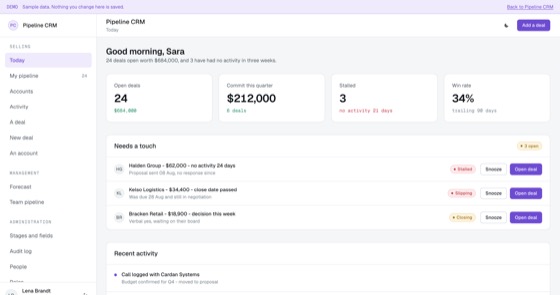
Pipeline CRM
Deal stages, forecasting and activity history for a sales team that has outgrown a spreadsheet.
5.0 out of 511 sold
OverviewMarketer1 / 6
4.5 out of 58 sold
Marketing tools are easy to buy and hard to leave, because your contact list and its consent history live in someone else's database. This build keeps both in yours.
From$679
Inside the app
22 connected functions on one schema, spanning three permission levels. Everything below is in the template before a line of customisation.
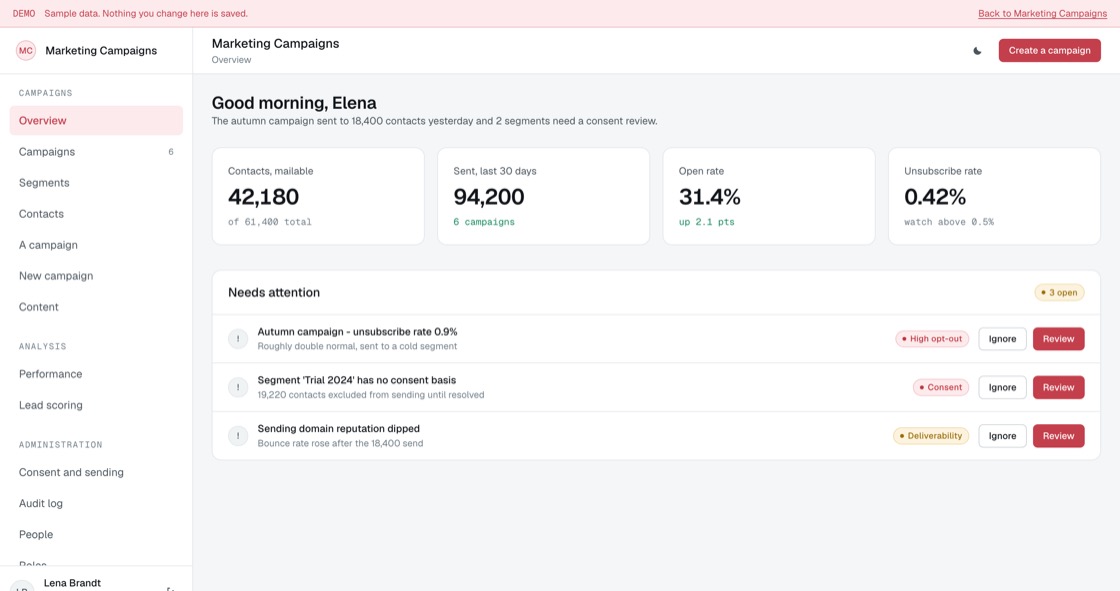
The autumn campaign sent to 18,400 contacts yesterday and 2 segments need a consent review.
What was sent, to whom, and what came back.
Who a campaign goes to, and whether you are allowed to send to them.
One record per person, with the consent history attached to it.
What campaigns produced, beyond opens.
What a score is made of, so sales can argue with it usefully.
Lawful basis per contact, and the sending setup that keeps mail delivered.
Every send, suppression and consent change. Retained for seven years.
Permissions
A marketer builds and sends. A manager owns attribution and scoring. An administrator owns consent policy, which is the part that decides whether you may send at all, and is therefore not a marketer's decision to make.
The build
9 screens, all of them live in the preview. Nothing on this list is a mockup or a roadmap item.
Access
Campaigns
Analysis
Administration
What you get
Marketing teams running email and lead nurture against a list of 1,000 to 500,000 contacts.
Access and evidence
The hard question is never whether someone is on your list, it is whether you can show how they got there. Owning the contact database is the point: your list and its consent history stay in your infrastructure.
Related
Deal stages, forecasting and activity history for a sales team that has outgrown a spreadsheet.
5.0 out of 511 sold
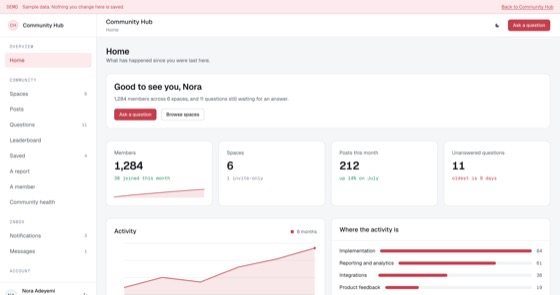
Spaces, posts and a question-and-answer board with reputation, saved items and a moderation queue that records every decision.
4.0 out of 52 sold
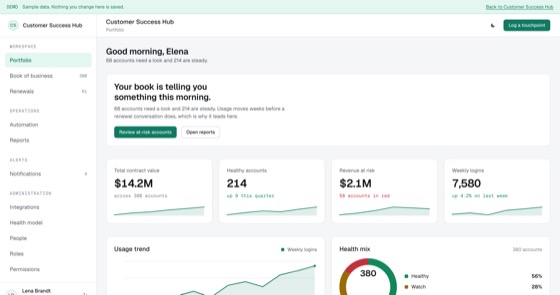
Health scores, renewal calendars and QBR prep for the team that keeps revenue from leaking.
4.5 out of 56 sold
Questions
Not covered here?
Ask a consultant directly. No form to fill in first, and no follow-up sequence.
Book a consultantAll questionsYes, and here it matters more than usual: your contact list and its consent history are the asset most marketing platforms hold hostage. On delivery both live in your database, under your control.
No. It gives you the mechanisms compliance depends on, evidenced consent, lawful basis per contact, permanent suppression, and export and erasure on request. Whether you are compliant depends on your policies, your privacy notice and how you actually operate. We scope the specific controls your regulator expects as part of a fitted build.
It composes, segments, schedules and records. Actual delivery goes through a sending provider, which is a standard integration in a fitted build. You keep your own sending reputation and your own rates rather than inheriting a shared pool.
They are suppressed, not deleted, and cannot be sent to until a basis is recorded and evidenced. Keeping the record rather than quietly removing it is deliberate: if you are ever asked what happened to a list, you can answer.
That is the usual route. A fitted build sets up your segments, scoring model, email templates, sending domains, consent wording, CRM sync, branding and up to two integrations, and typically takes one to three weeks from a signed scope.
Hosting only, paid to your own cloud provider, roughly $50 to $200 a month, plus whatever your sending provider charges per email, which you pay them directly.
Start here
A fitted build adjusts fields, stages, roles and integrations to how your team already works. One scoping call, a fixed price, one to three weeks.