Salon & BeautyLive


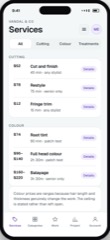
Salon Appointment Booking
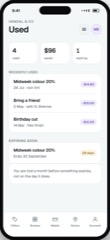
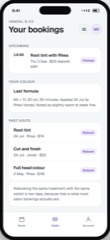
Booking against real stylist availability, with deposits and colour history.
5.0 out of 510 sold
RotaOwner1 / 5
4.5 out of 54 sold
The floor behind the diary: who is working, who is signed off for what, and what each chair actually earns. Kept in a system rather than in a WhatsApp group.
From$699
Inside the app
22 connected functions on one schema across 2 user types. Everything below is in the template before a line of customisation.
Built by week and published once, with unfilled hours visible before Saturday arrives rather than on the morning.
Who is signed off for what, and it drives the booking app. A skills matrix that does not stop a booking is decoration.
Requests with cover shown at the moment of deciding, so an approval is made with the rota in view rather than from memory.
Calculated from takings on your rules. Commission worked out by hand at month end is the single most common source of salon arguments.
What a chair earns against what it costs. The number that decides whether to hire, and most salons cannot produce it.
A stylist sees their own numbers and nobody else’s. Enforced, not merely hidden in the interface.
User types
The owner sees the salon and a stylist sees themselves. That boundary matters more here than almost anywhere else, because the data includes what people earn.
01Owner
3 of 5 screens
Builds the rota, holds the skills matrix, approves holiday and sees what each chair earns against what it costs.
Preview as the owner02Staff
2 of 5 screens
Sees their own rota, their own numbers and asks for time off, without seeing the whole salon’s finances.
Preview as the staffThe limits
The same list we give for every app in the catalogue, because the fastest way to a bad project is a promise made in a meeting that nobody wrote down.
It calculates commission and hours. Paying people, tax and statutory deductions run through your payroll provider, Payroll in the business catalogue is the internal counterpart.
Contracts, working time rules and holiday entitlement where you trade remain yours to satisfy. We build to the rules you confirm apply.
Nothing here moves money.
It will show the numbers and how they were reached, which is usually enough, but the rules are yours to set and defend.
Questions
If yours is not here, ask it on the call rather than guessing from a pricing page.
Not covered here?
Ask a consultant directly. No form to fill in first, and no follow-up sequence.
Book a consultantAll questionsNo. It calculates commission and hours and hands them to your payroll provider. Building payroll properly means statutory deductions in every jurisdiction you operate in, and that is not a thing to bolt onto a salon app.
No, and it is enforced server-side rather than hidden in the interface. It is the single most sensitive thing in the system.
Yes, if you run Salon Appointment Booking alongside it. A stylist not signed off for colour cannot be booked for colour. A matrix that does not enforce anything is a spreadsheet.
A request shows the cover position for those dates at the moment you decide, so approval is not made from memory and then regretted on the Friday.
Yes. Both apps, API, schema, migrations and deployment configuration transfer on delivery.
Related
Booking against real stylist availability, with deposits and colour history.
5.0 out of 510 sold
Treatments with real duration, price and who is qualified to do them.
4.5 out of 53 sold
Promotions with rules that hold, instead of a discount code that leaks everywhere.
4.0 out of 52 sold
Start here
The preview is the real app with sample data. Open it and judge the software rather than the pitch.