Fitness & WellnessLive
Gym App
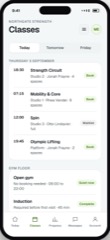
Class booking, passes and training plans for members, with a diary and client roster for trainers.
5.0 out of 510 sold
TodayUser1 / 7
4.5 out of 57 sold
For the trainer who is the business. Diary, clients, programmes and what is owed, on your own app rather than a shared marketplace that takes a cut of every session.
From$799
Inside the app
26 connected functions on one schema across 2 user types. Everything below is in the template before a line of customisation.
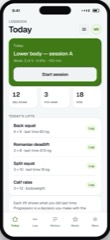
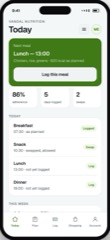
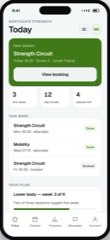
The client opens on their next session and what is left on their package, not a marketing splash.
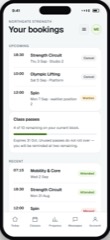
Book against the trainer’s real availability, reschedule inside the window you set, and see the cancellation rule before agreeing to it.
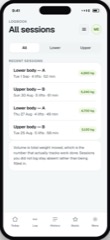
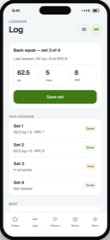
The programme their trainer assigned, with sets, reps and load, logged from the gym floor on their own phone.
Lifts over time and sessions completed, so a review is a conversation about data rather than memory.
The trainer’s day, including the gaps. An empty 11am is stock you have not sold, and it is shown as such.
Everyone on the roster with last visit, package balance and programme progress, and a flag on whoever has quietly stopped booking.
Packages sold, sessions drawn down, and unpaid sessions listed by age, the number most independent trainers cannot produce on demand.
User types
The client sits outside your business and the trainer runs it, so permissions start with the client rather than being bolted on afterwards. Hiding a screen is presentation; a real deployment enforces the same rules on the server.
01User
4 of 7 screens
Books and pays for sessions, follows the programme between them, and logs what they actually did. Sees their own record only.
Preview as the user02Trainer
3 of 7 screens
Runs the business: diary, clients, programmes and what is owed. One trainer, or a small team, without a gym behind them.
Preview as the trainerThe limits
The same list we give for every app in the catalogue, because the fastest way to a bad project is a promise made in a meeting that nobody wrote down.
Programmes are what you prescribe as a trainer. Anything needing a physiotherapist, dietitian or clinician stays with them, and the app does not imply otherwise.
Packages and sessions are recorded and chased. The money moves through your own payment provider, which is what keeps the commission at zero.
It replaces the booking and admin layer, not the marketing. A marketplace takes a cut partly because it generates leads.
We build to Apple and Google’s published guidelines, submit from your developer accounts and fix what comes back. Nobody can promise a date.
Questions
If yours is not here, ask it on the call rather than guessing from a pricing page.
Not covered here?
Ask a consultant directly. No form to fill in first, and no follow-up sequence.
Book a consultantAll questionsThe Gym App is built around a timetable: classes, capacity, waitlists and a gym floor. This is built around one trainer’s diary and their clients, with packages and billing instead of memberships. If you run classes, you want the other one.
Yes. The repository, client app, trainer app, API, schema, migrations and deployment configuration, transfers to you on delivery. No licence key, nothing that calls home.
It records what was sold, what has been drawn down and what is unpaid, and drives the chase. Collection runs through your own payment provider account rather than through us.
They can see your availability without one. An account is created at the first booking, because a package balance has to belong to somebody.
The trainer role is per person: each sees their own diary and clients. A business-wide owner view across all trainers is the most common first change in a fitted build.
That is the usual route. A fitted build sets up your session types and durations, package and expiry rules, cancellation window, branding and up to two integrations, typically in one to three weeks from a signed scope.
Related
Class booking, passes and training plans for members, with a diary and client roster for trainers.
5.0 out of 510 sold
Programme, session logging, lift history and personal records for one person training alone.
4.5 out of 58 sold
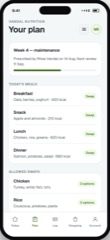
Plans a dietitian prescribes, meals the client logs, and adherence both can see.
4.0 out of 53 sold
Start here
The preview is the real app with sample data. Open it and judge the software rather than the pitch.