Client Portal
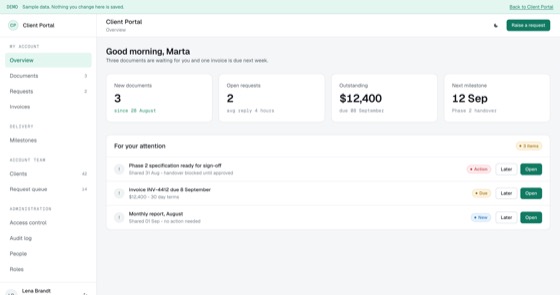
A branded space where your customers see their documents, requests and invoices without emailing you.
5.0 out of 59 sold
OverviewCase Handler1 / 6
Lending decisions get challenged, and the file is the defence. This build records what was known, what was decided and why, in a form a regulator or an ombudsman can follow.
From$799
Inside the app
22 connected functions on one schema, spanning three permission levels. Everything below is in the template before a line of customisation.
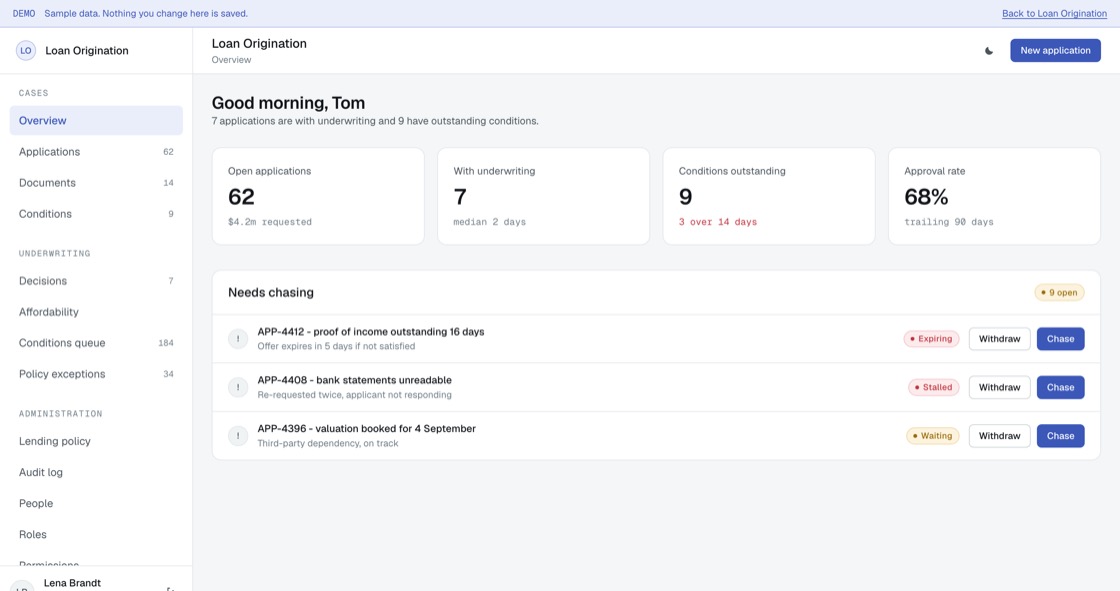
7 applications are with underwriting and 9 have outstanding conditions.
Every case and its stage. Time in stage is visible, because that is what slips.
What was supplied, when, and whether it was legible enough to rely on.
What must be satisfied before drawdown, and who owns each one.
Approve, decline or refer, with the reason recorded against the policy rule.
Income, commitments and stress testing. The arithmetic is shown, not hidden.
The rules decisions are measured against, and who may override them.
Every decision, override and policy change. Retained per your regulator's requirement.
Permissions
A case handler gathers and chases. An underwriter decides, within a mandate. An administrator sets the policy those decisions are measured against. In lending the separation is not a nicety. It is what makes the file defensible.
The build
9 screens, all of them live in the preview. Nothing on this list is a mockup or a roadmap item.
Access
Cases
Underwriting
Administration
What you get
Lenders, brokers and finance providers writing 50 to 5,000 agreements a year.
Access and evidence
A lending decision can be challenged years later by a customer, an ombudsman or a regulator. What protects you is not the decision but the contemporaneous record of what was known and which rule was applied.
Related
A branded space where your customers see their documents, requests and invoices without emailing you.
5.0 out of 59 sold
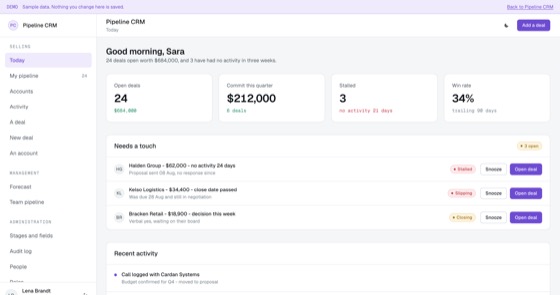
Deal stages, forecasting and activity history for a sales team that has outgrown a spreadsheet.
5.0 out of 511 sold
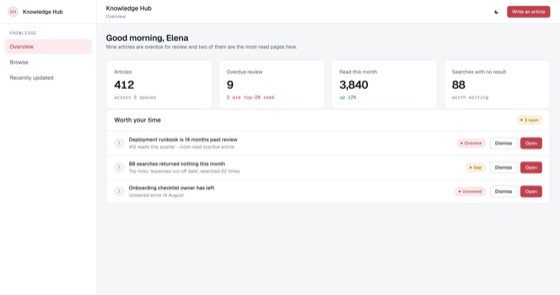
Internal documentation with real search, ownership, review dates and version history.
5.0 out of 58 sold
Questions
Not covered here?
Ask a consultant directly. No form to fill in first, and no follow-up sequence.
Book a consultantAll questionsYes. The repository, application code, database schema, migrations, seed data and deployment configuration, is transferred to your organisation on delivery. There is no licence key and nothing that calls home.
No, and be sceptical of any product that says it does. It gives you the mechanisms compliance depends on, policy rules applied consistently, decision reasons recorded, assessment data snapshotted, an append-only case file and full retention. Whether you are compliant depends on your permissions, your policies and how you operate. We scope the specific controls your regulator expects as part of a fitted build.
It applies your policy rules and shows the result, but a human approves, declines or refers. Automated decisioning is possible in a fitted build, though in most jurisdictions it carries obligations around explainability and the right to human review, which is a conversation to have before, not after.
Yes, and this is usually the first integration clients ask for. Credit reference agencies, open banking affordability data and identity verification are all standard integrations in a fitted build.
That is the usual route. A fitted build sets up your products, policy thresholds, stress test, mandate structure, document requirements, offer templates, branding and up to two integrations, and typically takes one to three weeks from a signed scope.
Hosting only, paid to your own cloud provider, roughly $50 to $200 a month, plus whatever your credit reference and identity providers charge per check, which you pay them directly.
Start here
A fitted build adjusts fields, stages, roles and integrations to how your team already works. One scoping call, a fixed price, one to three weeks.