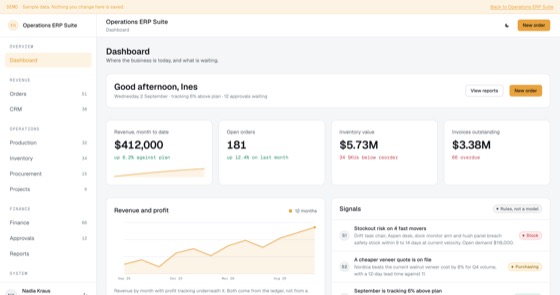
Operations ERP Suite
The full ERP spine: orders, CRM, production, stock, purchasing, projects, finance, approvals, reporting, people and automation.
5.0 out of 58 sold
TodayInspector1 / 6
4.5 out of 54 sold
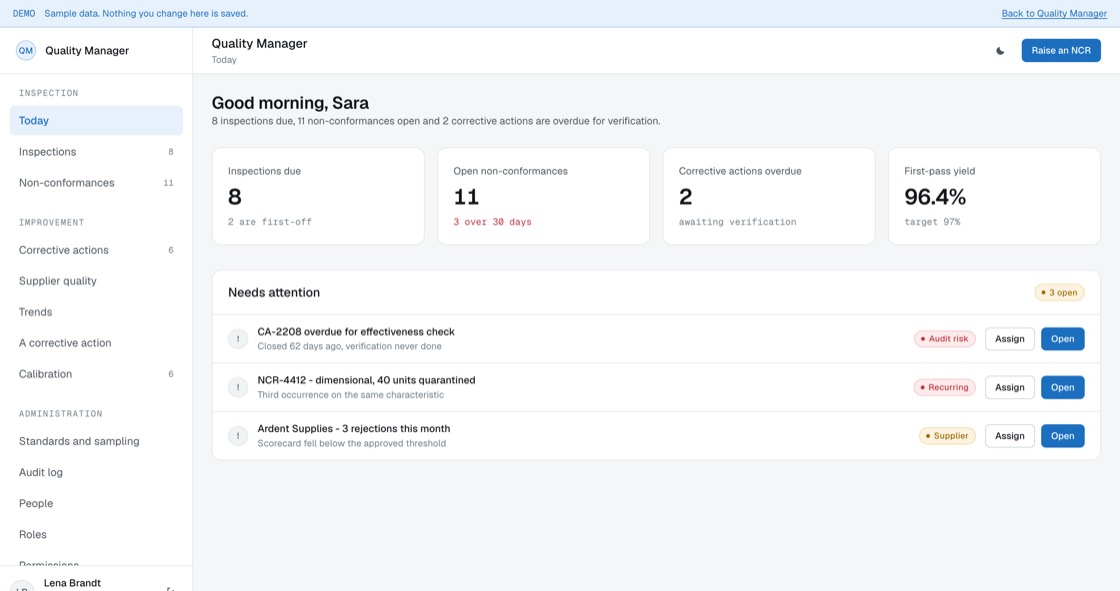
Quality systems fail their audit on the same thing every time: corrective actions that were opened, never closed, and never verified. This build makes that state impossible to hide.
From$679
Inside the app
22 connected functions on one schema, spanning three permission levels. Everything below is in the template before a line of customisation.
8 inspections due, 11 non-conformances open and 2 corrective actions are overdue for verification.
First-off, in-process and final, against the sampling plan for that part.
What was wrong, how much is affected, and where it went.
Root cause, action, and the effectiveness check that most systems quietly skip.
Rejection rate and response, scored per supplier, used at renegotiation.
Which defects recur, and whether corrective actions actually moved the number.
Which standard applies, and how much you inspect to satisfy it.
Every disposition, closure and standard change. Retained for the contractual period.
Permissions
An inspector records what they found. A quality manager owns corrective actions and supplier performance. An administrator sets the standard and the sampling. The separation between doing a fix and proving it worked is deliberate.
The build
9 screens, all of them live in the preview. Nothing on this list is a mockup or a roadmap item.
Access
Inspection
Improvement
Administration
What you get
Manufacturers and suppliers working to ISO 9001 or a customer-imposed quality standard.
Access and evidence
The most common non-conformance raised against a quality system is a corrective action closed without evidence it worked. Separating the fix from the proof is the single control that prevents it, and it costs nothing but discipline.
Related
The full ERP spine: orders, CRM, production, stock, purchasing, projects, finance, approvals, reporting, people and automation.
5.0 out of 58 sold
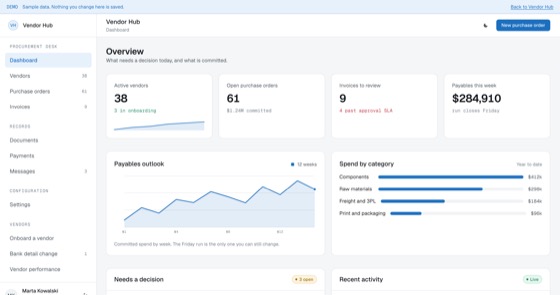
Two sides on one schema: your procurement desk, and a login where vendors acknowledge orders, invoice and keep documents current.
4.0 out of 54 sold
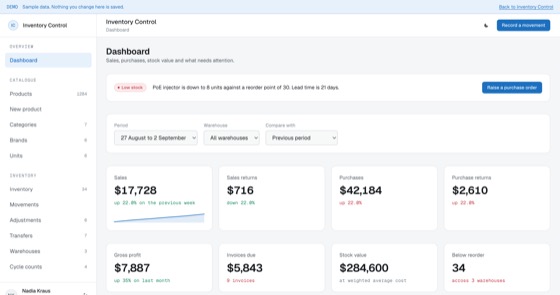
Catalogue, stock, warehouses, purchase orders, suppliers, sales, cycle counts and valuation, on one append-only movement ledger.
5.0 out of 510 sold
Questions
Not covered here?
Ask a consultant directly. No form to fill in first, and no follow-up sequence.
Book a consultantAll questionsYes. The repository, application code, database schema, migrations, seed data and deployment configuration, is transferred to your organisation on delivery. There is no licence key and nothing that calls home.
No. Certification is awarded by an accredited body assessing how you actually operate. What this gives you is the evidence trail an assessor asks for, inspection records, dispositions, root cause, corrective actions and verified effectiveness, in a form you can produce on the day rather than assemble the week before.
Because that is how ineffective fixes get signed off. Separating the fix from the proof is the control that catches the corrective action which was applied, felt right, and did not actually work. Overdue verifications escalate rather than sitting quietly.
From the sampling plan for that part family and inspection level, not from an inspector's judgement on the day. A supplier who drops below threshold moves to tightened inspection automatically, and back again once they recover.
That is the usual route. A fitted build sets up your sampling plans, inspection characteristics, disposition types, escalation rules, customer-specific requirements, branding and up to two integrations, and typically takes one to three weeks.
Hosting only, paid to your own cloud provider, roughly $50 to $200 a month, rising with inspection photo storage and how long your contracts require you to retain records.
Start here
A fitted build adjusts fields, stages, roles and integrations to how your team already works. One scoping call, a fixed price, one to three weeks.